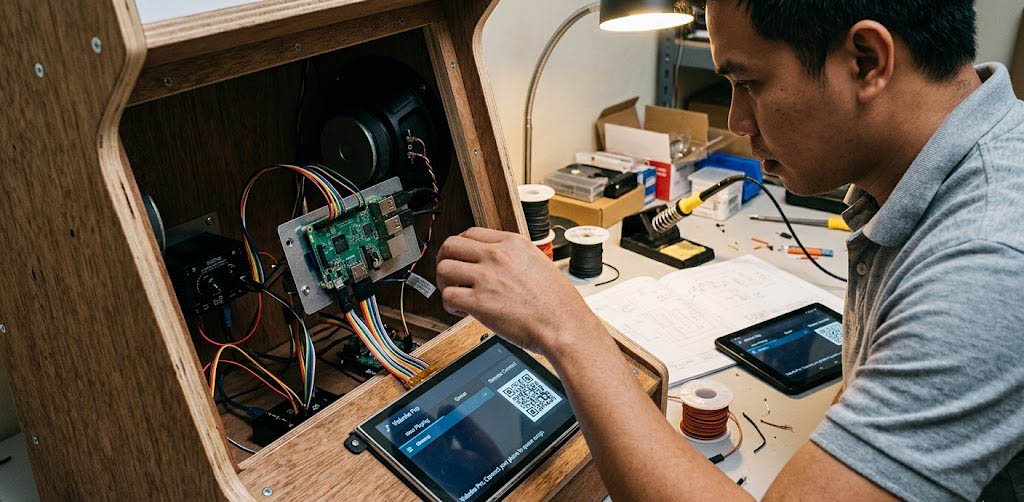
Building a Modern Videoke Machine? Let’s Work Together
Building your own videoke machine? Learn why Videoke Pro is the perfect software partner to power your modern karaoke setup with remote queuing and live scoring.

Building your own videoke machine? Learn why Videoke Pro is the perfect software partner to power your modern karaoke setup with remote queuing and live scoring.
Sing Karaoke Online Free – The Best Pinoy Videoke Site with No Downloads Needed Looking for the best way to sing karaoke online free without the hassle of downloading apps? Videoke.pro is your go-to Pinoy videoke site, offering a smooth and fun karaoke experience right from your browser. Whether you’re on your phone, tablet, or computer, you can belt out your favorite OPM hits, trending songs, and classic karaoke staples instantly. This no download karaoke web app is perfect for solo sessions, barkada sing-alongs, or family bonding nights. With a growing library of Tagalog and international songs, plus easy search features, videoke.pro brings the karaoke bar to your screen—completely free, anytime, anywhere! 1. The Modern Way to Sing Karaoke Online Free Karaoke has always been a huge part of Filipino culture. It’s more than just singing—it’s about bonding, expression, and joy. But today’s fast-paced world demands convenience, and traditional karaoke setups no longer suit everyone’s lifestyle. That’s where videoke.pro comes in. This platform gives you the easiest and most practical way to sing karaoke online free. You don’t need to set up a machine, buy microphones, or subscribe to paid services. With just your phone, tablet, or computer, you can sing any time, anywhere. Videoke.pro is built with simplicity and ease in mind, offering instant access to your favorite karaoke tracks directly from your browser. Whether you’re at home or on the go, this platform lets you start singing in seconds. It’s a no-fuss, no-cost experience designed for all ages and all kinds of karaoke lovers. 2. A True Pinoy Videoke Site with OPM and International Hits One of the biggest strengths of videoke.pro is that it’s proudly Filipino. It was created with the Filipino audience in mind, and that means it doesn’t just offer international hits—it shines when it comes to OPM. From heart-wrenching hugot songs to classic Tagalog ballads and feel-good party anthems, this platform is a true Pinoy videoke site. You’ll find tracks from artists like Moira, Regine, Aegis, Eraserheads, SB19, and many more. Of course, it also includes a vast selection of English and global hits for those who want variety. What sets videoke.pro apart is the quality of its song selections. All videos are sourced from YouTube, but instead of users needing to browse and guess which version is best, the site curates and organizes trusted karaoke videos in one clean, easy-to-navigate interface. That means you get accurate lyrics, high-quality audio, and smooth playback every time. It feels like your own karaoke library made just for Pinoys. 3. A No Download Karaoke Web App—With an Optional Mobile App Too Another reason people love videoke.pro is because of how flexible it is. If you want to sing directly from your browser without downloading anything, you can. It’s a fully functional no download karaoke web app. Just go to the website, search your song, and sing—no installation, no registration, and no waiting. This makes it perfect for those with limited storage space, older phones, or anyone who simply prefers not to install apps. But for users who want faster access and a more app-like experience, videoke.pro also offers an APK version that you can install on your Android phone. The choice is completely up to the user. The mobile app works just as smoothly and gives you the same access to curated YouTube karaoke videos. Whether you use the browser version or install the app, you get the same clean, user-friendly design and wide song selection. It’s a flexible solution that works with your needs, not against them. 4. Perfect for Parties, Families, and Everyday Singing Videoke.pro isn’t just for solo practice—it’s perfect for group settings, family bonding, and even events. You can use it during birthdays, reunions, road trips, or just lazy afternoons at home. It works great on phones, laptops, tablets, and even smart TVs, making it ideal for both spontaneous jamming and planned parties. The mobile-responsive design ensures that whatever screen you use, the experience remains smooth and enjoyable. For Filipinos abroad, it’s a piece of home that fits in your pocket. For parents, it’s an easy way to let kids sing without downloads. Even content creators and vloggers use videoke.pro to find high-quality karaoke tracks for their live streams and social media content. And with future updates on the way—including favorites, playlists, and pitch control—this platform is only going to get better. Whether you’re singing for fun, for practice, or for emotional release, videoke.pro is the easiest way to bring joy through music. It’s modern videoke, made for the modern Filipino.
Videoke vs. Karaoke: What’s the Difference? For music lovers, party hosts, and aspiring vocalists, karaoke and videoke are time-tested sources of fun and entertainment. These two forms of interactive singing have become global phenomena, but nowhere are they more embedded in daily life than in parts of Asia-particularly Japan and the Philippines. Although people often use the terms interchangeably, karaoke and videoke have distinct differences in format, user experience, and cultural usage. Understanding those differences can help users make better choices when selecting the right platform or device for their needs-especially with modern solutions like Videoke Pro now redefining the experience altogether. Karaoke: The Classic Experience Karaoke, which originates from Japan, means “empty orchestra.” It started gaining traction in the 1970s and became a worldwide trend. The concept is simple: a person sings along to an instrumental track while lyrics are displayed on a screen. In traditional karaoke bars, singers often perform in front of a crowd or in private booths, making it both a social and sometimes competitive event. Many Western karaoke setups are found in pubs or clubs, where singing is part of the entertainment for the night. Karaoke systems typically focus on audio quality and lyrics display, often without any video footage playing in the background. The song selection might require additional song packs or downloads, and there’s often no built-in scoring-it’s all about the music and the performance. Videoke: A More Visual and Interactive Twist Videoke, short for “video karaoke,” evolved later and found a passionate audience in countries like the Philippines. It builds on the karaoke foundation but adds several layers to enhance the overall user experience. The biggest difference is the use of visual backgrounds-either the original music video or generic scenic footage-that plays along with the lyrics on screen. In addition, many videoke systems come with a real-time scoring mechanism that evaluates your singing based on pitch, timing, and accuracy. This gamified element of scoring makes videoke incredibly popular at Filipino gatherings-be it birthday parties, family reunions, or even casual weekends. It turns singing into a social event where everyone, regardless of talent level, is encouraged to join in. The accessibility of videoke machines, especially those with thousands of built-in songs across various languages and genres, adds to its widespread appeal. Where Videoke Pro Comes In As technology continues to evolve, platforms like Videoke Pro have emerged to bring the videoke experience to a whole new level. Videoke Pro is a YouTube-based platform designed to combine the best aspects of both karaoke and videoke—offering access to high-quality instrumental tracks and synchronized lyrics streamed directly from YouTube. This allows users to tap into a massive, ever-growing song library without the limitations of built-in tracks or physical media. Unlike bulky traditional machines, Videoke Pro is digital-first and works on modern devices such as smartphones, smart TVs, and tablets, making it highly convenient and portable. Because it leverages YouTube, users benefit from an incredibly diverse selection of songs in multiple languages and genres, including the latest hits and timeless classics. Whether you’re a solo singer practicing at home or the host of a lively gathering, Videoke Pro provides a full-featured experience without the need for complex setup or expensive hardware. It caters to both casual users and serious singers through its intuitive interface, on-screen lyrics, and real-time scoring feature. It truly reflects how videoke has evolved—from a living room machine into a cloud-powered, accessible entertainment platform you can take anywhere. User Experience: Casual vs. Competitive One of the main contrasts between karaoke and videoke lies in the user experience. Karaoke, especially in formal bar settings, can feel more performance-based-people wait for their turn, sing on stage, and get judged silently (or loudly) by the audience. Videoke, on the other hand, is more inclusive and casual. Thanks to the scoring feature and background videos, the atmosphere is lighter and more entertaining. With Videoke Pro, users enjoy the best of both worlds. The app can be used casually for fun or seriously for vocal practice, depending on your mood or purpose. Plus, since it’s designed to be modern and user-friendly, it eliminates the limitations of old-school machines or DVD-based songbooks. Cultural Relevance and Modern Needs In the Philippines, videoke is more than just an activity-it’s a cultural tradition. It brings people together, provides a creative outlet, and turns any gathering into a lively celebration. With Videoke Pro, this tradition continues in a way that fits modern lifestyles. There’s no need to rent a machine, maintain hardware, or deal with limited song selections. Just open the app, pick your favorite song, and sing your heart out. Conclusion While karaoke and videoke share similar roots, their differences in presentation, technology, and user engagement make them distinct. Karaoke focuses on singing with instrumental tracks and is popular in performance-oriented settings. Videoke enhances the experience with video backgrounds, scoring, and user-friendly setups-especially in community and home settings. Now, with platforms like Videoke Pro, users can enjoy a hybrid solution that offers flexibility, fun, and a modern spin on a beloved tradition. Whether you’re a passionate singer or just someone looking to have fun with friends and family, Videoke Pro is the perfect companion to keep the music going-anytime, anywhere.
How to Turn Your Phone into a Videoke Machine with Videoke.pro How to Turn Your Phone into a Videoke Machine with Videoke.pro If you’re someone who loves singing and wants instant access to the latest karaoke songs without investing in an expensive setup, you’ll be glad to know that your smartphone is all you need. Thanks to Videoke.pro, you can turn your phone into a full-blown videoke machine-anytime, anywhere. Whether it’s for a house party, a weekend barkada hangout, or simply to destress alone at home, Videoke.pro delivers a smooth, enjoyable singing experience right from your mobile browser. What sets Videoke.pro apart from traditional karaoke apps or machines is its YouTube-based system, which gives users access to an almost unlimited and constantly updated library of karaoke songs. Unlike most karaoke systems that rely on a fixed song list, often outdated and limited in selection, Videoke.pro taps into the massive and ever-growing database of YouTube karaoke tracks. This means you can sing the newest OPM hits, trending K-pop songs, English pop chart-toppers, classic love songs, and even hard-to-find indie tracks-all without waiting for system updates or paying for song packs. Getting started is easy. Just visit https://videoke.pro using your smartphone’s browser. The website is mobile-friendly and loads quickly, even on slower connections. You’ll be welcomed by a clean interface with a search bar, trending songs, and various categories to explore. Whether you want to sing a new release from your favorite artist or go for a nostalgic classic, all it takes is a quick search and a tap to start your session. Here’s a helpful tip for searching songs: since Videoke.pro pulls its videos directly from YouTube, make sure to include the keyword “karaoke” in your search terms. For example, instead of just typing “Bruno Mars,” type “Bruno Mars karaoke” to get karaoke versions of his songs. This technique works just like searching on YouTube and helps the system bring up more accurate, sing-along-ready results. It’s especially useful when looking for specific versions of songs, such as those with on-screen lyrics or in different keys. The karaoke videos available on Videoke.pro feature synchronized lyrics, high-quality instrumental audio, and familiar YouTube-style playback-no ads interrupting your song in the middle. Because it’s built on YouTube’s massive collection, new songs are added by creators in real-time, giving you instant access to the freshest videoke content. That’s a huge edge over traditional karaoke systems that require manual software updates or expensive subscriptions just to get new titles. To enhance your experience, you can connect your phone to a Bluetooth speaker for better sound, and use a plug-and-play karaoke microphone that works with mobile devices. If you’re having a group sing-along, it’s easy to cast your screen to a smart TV using Chromecast, Apple AirPlay, or screen mirroring apps. This makes it feel just like you’re using a professional videoke setup-without the bulky hardware or complicated wiring. Because of its versatility, Videoke.pro is perfect not only for casual singers but also for those who stream their karaoke sessions online, perform in small gigs, or host family events. And since it’s all run through your browser, there’s no need to download large apps or worry about storage space. It works seamlessly across both Android and iOS devices. One more advantage is that Videoke.pro doesn’t flood you with annoying in-app ads like many karaoke apps do. It’s clean, fast, and straightforward-just search, sing, and enjoy. For users who want to sing offline, some choose to pre-load or record the screen for personal use, although internet access is generally recommended for the best experience and full access to new content. In conclusion, turning your phone into a videoke machine is no longer a dream-it’s a reality with Videoke.pro. Thanks to its YouTube-based system, it offers unmatched access to the latest and widest selection of karaoke songs, updated in real-time. Just remember to use smart search terms-like including “karaoke” after every song title-and you’re set. Say goodbye to outdated playlists and hello to a smarter, simpler way to sing. All you need is your phone, an internet connection, and your love for music. So go ahead-visit Videoke.pro today and start your own karaoke party wherever you are.
Videoke.pro vs. Paid Karaoke Software & Renting Karaoke Machines: Why Videoke.pro is the Best Choice When it comes to karaoke, users have several options: free web or mobile apps like Videoke.pro, paid karaoke software, or renting physical karaoke machines. Each option has its pros and cons, but Videoke.pro offers a unique balance of convenience, affordability, and high-quality features that make it a superior choice for both casual singers and serious karaoke enthusiasts. Free Web & Mobile Apps (Videoke.pro) vs. Paid Karaoke Software Advantages of Videoke.pro (Free Web & Android App) Videoke.pro stands out among free karaoke apps because it provides a seamless, user-friendly experience without requiring expensive subscriptions or installations. Here’s how it compares to paid karaoke software: ✔ No Cost, No Hidden Fees Unlike paid karaoke software that charges for premium features, Videoke.pro is completely free. Users don’t need to worry about monthly subscriptions or one-time purchase fees, making it accessible to everyone. ✔ No Need for Downloads or Storage Space Many paid karaoke programs require large installations, taking up significant storage space on devices. Videoke.pro operates directly in a web browser or as a lightweight Android app, eliminating the need for heavy downloads. ✔ Instant Access to a Massive Song Library Powered by YouTubeUnlike paid karaoke software that requires additional purchases for new tracks, Videoke.pro gives you unlimited access to YouTube’s vast collection of karaoke tracks and lyrics videos through YouTube API integration. How It Works:To enable YouTube song search, simply: Create your own free YouTube API key Paste it in Videoke.pro’s settings Enjoy unlimited access to YouTube’s karaoke content Benefits You Get: Always up-to-date – Instant access to the latest song releases No song purchase fees– All content is freely available Unlimited variety– Covers every genre imaginable User-generated content– Includes indie and local songs Automatic updates– New karaoke tracks added daily Important Note:Videoke.pro requires your personal YouTube API key for legal content access. This ensures:✓ Compliance with YouTube’s terms of service✓ No copyright issues for the app developers✓ Personalized usage within YouTube’s free API limits The YouTube integration ensures you’ll never run out of songs to sing, with new content being added continuously by creators worldwide. While paid services limit you to their proprietary libraries, Videoke.pro opens up the entire YouTube karaoke universe at no cost. Simply search and sing any song that has a karaoke version available on YouTube. Pro Tip: Creating a YouTube API key takes just 5 minutes and remains free for normal usage levels. Detailed instructions are provided in Videoke.pro’s setup guide. ✔ Cross-Platform Compatibility (PC, Tablet, Smartphone & Android TV) Unlike paid karaoke software that’s often limited to specific operating systems (e.g., Windows or macOS), Videoke.pro offers universal compatibility: PC/Laptop: Works on any web browser (Chrome, Firefox, Edge) Tablets: Fully responsive on iPad, Android tablets Smartphones: Optimized for both Android and iOS browsers Android TV: Can be installed for big-screen karaoke parties This multi-platform support means you can start singing on your phone during commute, continue on your laptop at home, and host a karaoke party using Android TV – all with the same account and preferences. ✔ No Licensing or DRM Restrictions Some paid karaoke programs restrict usage with digital rights management (DRM), limiting how and where songs can be played. Videoke.pro avoids these restrictions, allowing users to sing anytime, anywhere. Limitations of Paid Karaoke Software While paid karaoke software (e.g., Singa, Karafun, PCDJ Karaoke) offers advanced features, they come with downsides: High upfront or subscription costs (e.g., 10–10–30/month or 50–50–200 for lifetime licenses) Song purchases add up quickly (some charge per track) Platform limitations (many work only on Windows/Mac, not TVs or mobile) Requires powerful hardware (some professional karaoke software needs high-end PCs) Geographical restrictions (some songs may not be available in certain regions) Videoke.pro eliminates these issues by providing a free, hassle-free alternative with similar functionality across all devices. Videoke.pro vs. Renting a Physical Karaoke Machine Renting a karaoke machine is a traditional option for parties and events, but it has several drawbacks compared to Videoke.pro: ✔ No Rental Costs or Deposits Karaoke machine rentals can cost 50–50–300 per day, depending on equipment quality. Videoke.pro requires no rental fees-just an internet-connected device. ✔ No Setup or Technical Hassles Rented machines require speakers, microphones, and sometimes professional setup. Videoke.pro works instantly on any compatible device: Connect your existing TV (via Android TV or HDMI from laptop) Use Bluetooth speakers for enhanced sound Plug in USB mics directly to your device ✔ No Transportation or Late Fees Renting involves pickup/return trips and potential late charges. Videoke.pro is available 24/7 without logistical headaches. ✔ Always Up-to-Date Song Selection Rental machines often have outdated song CDs or limited digital libraries. Videoke.pro constantly updates its catalog with the latest hits. ✔ Space-Saving & Portable Karaoke machines take up physical space and may not be easy to move. Videoke.pro turns any compatible device into a karaoke system: Smartphones for personal practice Tablets for small gatherings Laptops +TV for home theater experience Android TV for professional-grade parties Unique Benefits of Videoke.pro Beyond being a free alternative, Videoke.pro offers features that rival paid software and physical rentals: Real-Time Voice Effects & Pitch Control Many paid apps charge extra for voice effects (echo, reverb, pitch adjustment). Videoke.pro includes these features for free, enhancing the singing experience across all platforms. Mobile-Friendly & Offline Mode (Android App) Unlike browser-only karaoke sites, Videoke.pro has a dedicated Android app with offline support-great for areas with poor internet. The app maintains full compatibility with: Android smartphones (version 5.0+) Android tablets Android TV devices Lyrics Synchronization & Scoring System Some free apps lack synchronized lyrics or scoring. Videoke.pro provides accurate lyrics timing and a scoring feature to track performance, working seamlessly whether you’re using a phone, tablet, or TV. Conclusion: Why Videoke.pro is the Best Choice While paid karaoke software and rented machines have their uses, Videoke.pro combines the best aspects of both worlds: Free & accessible(no subscriptions or rentals) Universal compatibility(PC, tablet, smartphone, Android TV) No bulky equipment(works on devices you already own) Always updated(no outdated song libraries) Professional features(voice effects, scoring, recording) For casual singers, party hosts, or karaoke lovers who want a high-quality experience without spending money, Videoke.pro is the ultimate solution. Whether competing with paid software or traditional rentals, it delivers convenience, affordability, and performance. Al in one free platform that works across
The Power of Karaoke: How Filipino Celebrities Use Singing as Preparation for Success In the Philippines, karaoke is more than just a pastime-it’s a cultural phenomenon deeply embedded in the lives of Filipinos, including many of the country’s most successful celebrities. Among the many artists who have embraced karaoke as part of their vocal training and pre-competition preparation are world-renowned performers such as Regine Velasquez, Sarah Geronimo, and Morissette Amon. These celebrities often speak fondly of how karaoke played a vital role in their early development as singers and continues to serve as a reliable tool before high-stakes performances or competitions. Regine Velasquez, known as Asia’s Songbird, has shared in interviews how she used to sing with a karaoke machine her father built for her, practicing for hours to perfect her pitch and vocal power. Similarly, Sarah Geronimo, often dubbed the Popstar Royalty, rose to fame through singing competitions and relied heavily on karaoke to practice songs across various genres. Morissette Amon, known for her exceptional vocal range, also credits karaoke sessions in her younger years for helping her gain confidence and explore different singing styles. For these artists and many others, karaoke is more than just entertainment-it is a form of rehearsal, a technique enhancer, and a mental preparation tool. One of the key benefits celebrities derive from karaoke is vocal conditioning. Singing regularly through karaoke helps warm up the vocal cords, improve breath control, and maintain vocal endurance. Since karaoke tracks span a wide variety of genres and vocal demands, singers can choose specific songs that challenge their range or help them focus on technical aspects like vibrato, falsetto, and dynamics. This variety ensures that vocalists are not just repeating the same style but are stretching their capabilities in different directions. Another major advantage is lyrical mastery. Karaoke lyrics displayed on screen allow singers to memorize and internalize song lyrics more effectively. This is especially important for artists who must perform multiple songs in a single event or competition. Being able to quickly pick up new material and recall lyrics with ease is a skill developed and honed through regular karaoke sessions. In a high-pressure environment such as televised competitions or international events, this skill can make a significant difference in performance quality. In addition to technical improvements, karaoke also provides psychological benefits. It helps reduce anxiety and boost confidence, especially before a performance. For many celebrities, karaoke serves as a relaxed, informal space to rehearse without the scrutiny of producers, coaches, or a live audience. This can be a safe zone where singers are free to make mistakes, experiment with song interpretation, and test different vocal approaches without judgment. The emotional release that comes with singing also helps regulate mood and calm nerves, which is crucial for performers preparing for a stressful competition. Furthermore, karaoke fosters stage presence and charisma. Even in informal karaoke settings, singers are still performing in front of friends, family, or small audiences. This gives them a chance to connect with listeners, develop eye contact, and work on their expressions and gestures-all essential elements of a compelling stage performance. For celebrities who began singing in small barangay events or family gatherings using karaoke, this early exposure to performing in front of others becomes foundational in building their confidence and stage personality. Another important benefit is ear training. Karaoke allows singers to closely listen to backing tracks and recognize subtle musical cues such as key changes, tempo shifts, and phrasing. This sharpens their ability to adapt quickly when performing live with a band or accompaniment. A well-trained ear is critical in competitions, where improvisation or adjustments may be required on the spot. Additionally, karaoke exposes artists to different genres and languages, making them more versatile. In the Philippines, karaoke machines typically include a wide selection of OPM (Original Pilipino Music), Western pop, ballads, rock, and even K-pop or Japanese songs. By practicing these, singers become more flexible and capable of performing across a broader range of music styles, which is an invaluable asset in both local and international competitions. Karaoke also helps in maintaining vocal health. Unlike belting out songs unaccompanied, karaoke often includes instrumental support that helps singers stay on pitch and avoid straining their voices. It gives them cues for when to rest, when to breathe, and how to modulate their voice. Some vocal coaches even recommend karaoke as a supplement to formal vocal training because it encourages natural and consistent singing without overexertion. Another benefit that often goes unnoticed is the community support that comes with karaoke. Celebrities who began their careers in humble beginnings often recall moments when neighbors or family members would cheer them on during karaoke sessions at home. This sense of encouragement and belonging becomes part of their emotional fuel when competing in bigger arenas. For example, Marcelito Pomoy, who gained fame through “Pilipinas Got Talent” and later “America’s Got Talent: The Champions,” has spoken about singing on a karaoke machine in his neighborhood, with locals cheering him on. That early validation and support gave him the courage to pursue his dreams and take risks in global competitions. For younger artists or those still emerging in the entertainment industry, karaoke continues to serve as a vital practice tool. Even with access to professional studios, many Filipino artists keep a karaoke setup at home or on their mobile devices to sing anytime inspiration strikes. This constant practice maintains their vocal agility and ensures they are always performance-ready. The accessibility of karaoke also means that preparation can happen in any location, without needing elaborate equipment or full band rehearsals. In summary, karaoke is more than just a stepping stone-it is a continuous companion for many Filipino celebrities. It nurtures their talent from childhood, sharpens their skills in adulthood, and serves as a warm-up and therapeutic outlet before big competitions. Whether it’s Regine Velasquez perfecting her high notes, Sarah Geronimo rehearsing choreography while singing, or Morissette Amon experimenting with vocal runs, karaoke plays a pivotal role in their preparation
Unlocking Your Voice: The Benefits of Practicing with Karaoke Practicing your voice with karaoke is a fun, engaging, and scientifically grounded method to enhance vocal performance, build confidence, and improve various aspects of communication and singing. Karaoke, a form of interactive entertainment where individuals sing along to recorded music using a microphone and lyrics display, serves as a dynamic tool for vocal training. It offers benefits that span across physiological, psychological, neurological, and social dimensions, making it a comprehensive activity for vocal development. In this essay, we will explore how to effectively practice your voice using karaoke and delve into the scientific explanations behind the benefits it provides. To begin with, karaoke provides a structured yet flexible way to practice vocal technique. The presence of instrumental backing tracks allows singers to focus solely on their voice without being distracted by live instrumentation. By singing along to well-known songs, individuals can work on pitch accuracy, breath control, vocal range, tone quality, and timing. The practice is self-paced and adaptable to various skill levels. Beginners can choose slower, simpler songs, while more advanced singers can challenge themselves with complex vocal arrangements. Regular karaoke practice builds muscle memory in the vocal cords and improves control over vocal modulation. Just as athletes train their muscles for peak performance, singers must exercise their vocal muscles to maintain agility and strength. From a physiological standpoint, singing—especially with consistent karaoke practice—has numerous health benefits. When we sing, we engage the respiratory system intensively. Deep inhalations are followed by controlled exhalations, which strengthen the diaphragm and intercostal muscles. This process enhances lung capacity and improves oxygen exchange in the body. According to research in music therapy and vocal pedagogy, singing stimulates the vagus nerve, which is involved in parasympathetic nervous system activity. This activation leads to a decrease in cortisol levels (a stress hormone), promoting relaxation and reducing anxiety. Additionally, good singing posture—often required in karaoke performances—encourages spinal alignment and muscular engagement, contributing to overall physical health. On a neurological level, singing engages multiple regions of the brain simultaneously, including the auditory cortex, motor cortex, Broca’s and Wernicke’s areas (associated with speech production and comprehension), and the limbic system (which processes emotions). Practicing with karaoke helps in strengthening neural connections between these areas, particularly when a singer pays close attention to pitch, lyrics, rhythm, and emotional expression. A 2013 study published in Frontiers in Human Neuroscience showed that singing helps increase neuroplasticity—the brain’s ability to reorganize itself by forming new neural connections. This is especially important for language development, memory retention, and emotional intelligence. Karaoke, which combines listening, visual reading (of lyrics), and vocal performance, provides an ideal environment for this kind of brain exercise. One of the distinctive advantages of karaoke is its ability to improve vocal pitch and intonation. Many karaoke systems come with pitch guides or scoring mechanisms that provide immediate feedback. This feedback loop allows singers to self-correct and gradually become more attuned to musical scales. Pitch-matching, a critical skill for singing in tune, becomes easier with repeated exposure to reference tracks and the act of mimicking professional vocalists. Furthermore, karaoke songs often span various genres, giving singers the opportunity to experiment with different vocal styles and techniques, from belting and falsetto to vibrato and melisma. This variety keeps practice sessions dynamic and fosters vocal versatility. Karaoke also enhances breath control, a cornerstone of strong vocal performance. Singing requires controlled exhalation and efficient breath management to sustain phrases, maintain pitch, and avoid vocal strain. Karaoke allows for repeated practice of breath timing within familiar musical structures. Over time, this leads to more efficient use of the respiratory system, enabling singers to produce longer, clearer, and more powerful vocalizations. Scientific studies on singers show that regular vocal training can increase tidal volume (the amount of air moved in and out of the lungs) and improve overall cardiovascular function. Thus, karaoke serves not only as a vocal exercise but also as a form of aerobic activity that contributes to general physical fitness. Psychologically, karaoke is a powerful confidence booster. For many individuals, public speaking or singing can be daunting. Karaoke provides a low-stakes environment to practice performing in front of others, often among friends or in casual settings. This helps reduce performance anxiety and builds stage presence over time. The positive feedback and encouragement received during karaoke sessions can reinforce self-esteem and motivation to continue improving. Singing also triggers the release of endorphins—natural “feel-good” chemicals in the brain—which can elevate mood and contribute to mental well-being. Moreover, the act of emotionally engaging with lyrics and melodies fosters greater emotional expression and empathy. Socially, karaoke is a communal activity that fosters connection and cooperation. Singing in groups or duets can improve harmony, rhythm synchronization, and timing. These elements are not only musically significant but also beneficial for developing social bonds and team dynamics. According to a 2014 study published in Royal Society Open Science, group singing promotes social cohesion by synchronizing breathing and heart rates among participants. This phenomenon, known as “entrainment,” increases feelings of unity and belonging. For individuals with social anxiety or isolation, karaoke can serve as a gateway to more meaningful interpersonal interactions. To maximize the benefits of karaoke practice, it’s important to adopt a few strategies. First, warm up your voice before each session with gentle vocal exercises such as lip trills, humming, or sirens. These activities prepare the vocal cords for extended use and prevent strain. Second, choose songs that are within your comfortable vocal range and gradually work your way toward more challenging pieces. This prevents injury and ensures consistent progress. Third, record yourself singing and review the playback to identify areas for improvement in pitch, diction, or expression. Self-evaluation is a critical component of effective practice. Fourth, use karaoke sessions to focus on specific skills—such as breath control, dynamics, or articulation—rather than trying to perfect everything at once. In conclusion, practicing your voice with karaoke is much more than a recreational pastime. It is a multifaceted activity that benefits
Karaoke Culture in the Philippines: More Than Just Singing In the Philippines, karaoke isn’t just entertainment—it’s a way of life woven into the very fabric of society. Walk through any neighborhood after sunset, and the unmistakable sounds of videoke machines will greet you—laughter mixing with off-key renditions of classic ballads drifting through open windows. This national pastime transforms ordinary moments into celebrations, turning shy individuals into confident performers and strangers into instant friends. Whether it’s a child’s birthday party in a cramped Quezon City apartment, a neighborhood gathering in a provincial barangay, or even the somber atmosphere of a wake in Pampanga, the karaoke machine serves as both entertainer and emotional outlet. I remember one particularly memorable night in a Cebu carinderia where the owner’s daughter, no more than ten years old, brought the house down with her surprisingly powerful rendition of Sharon Cuneta’s “Sana’y Wala Nang Wakas”—proof that the karaoke spirit starts young here. The Filipino approach to karaoke reveals much about our cultural values. It’s never been about perfect pitch but about shared experience and bayanihan through song. In Makati’s business districts, you’ll find office workers bonding over 90s boy band hits after a stressful week, their neckties loosened as they harmonize to Backstreet Boys. Provincial family reunions transform into impromptu concerts, with titos and titas taking turns belting out Air Supply classics while the younger generation rolls their eyes but eventually joins in. Even the most modest street-side carinderias often have a basic karaoke setup—usually a weathered machine with two microphones where customers can sing while waiting for their tapsilog. My cousin in Bulacan tells me about their local sari-sari store where the videoke machine operates on a honor system—regulars know to drop 20 pesos in the jar for every three songs. What truly makes our karaoke scene special is its beautifully democratic nature. Unlike formal performances where talent matters most, here the willingness to participate counts far more than skill. The loudest cheers often go to the most enthusiastic rather than the most talented performers. During a recent visit to a Davao karaoke bar, I witnessed a middle-aged man completely butcher the high notes of Journey’s “Faithfully,” only to receive thunderous applause and shouts of “Encore!” from his barkada. This inclusive atmosphere removes the fear of judgment, explaining why even the most tone-deaf tito will confidently tackle Queen’s “Bohemian Rhapsody” after a few rounds of Red Horse. The social dynamics around the karaoke machine reveal volumes about unspoken Filipino etiquette. There’s always an understood queue system, though close friends might playfully cut in line with a “Pasingit lang!” Song choices become a subtle language—upbeat OPM numbers like “Pinoy Ako” to energize the crowd, emotional ballads like Basil Valdez’s “Ngayon at Kailanman” for late-night reflections. Seasoned karaoke-goers develop a sixth sense for reading the room, instinctively knowing when to avoid mood-killers (no one wants to hear “My Heart Will Go On” at a lively drinking session) or potentially dangerous choices (we all know about the “My Way” incidents in Caloocan bars last year). The machine becomes the evening’s social compass, its playlist dictating the gathering’s emotional rhythm. Our karaoke culture also serves as a living time capsule of Philippine music history. The most requested songs span generations—from the timeless APO Hiking Society tunes that lolas still request, to modern Moira ballads that millennials tearfully dedicate. These musical choices create unexpected bridges between ages; I’ve seen teenagers in Cavite enthusiastically singing along with their grandparents to Freddie Aguilar’s “Anak,” the lyrics taking on new meaning in their shared performance. The machines themselves tell a story of technological evolution—from the bulky 90s setups with cassette tapes that my uncle used to rent out for parties, to today’s digital systems with thousands of tracks and YouTube-style lyric videos. Yet despite these changes, the core experience remains beautifully consistent—people connecting through music. This cultural phenomenon has spawned entire micro-economies across the archipelago. In Manila’s university districts, 24-hour karaoke bars cater to students cramming for exams or celebrating after finals. Provincial entrepreneurs have built businesses around portable machine rentals—I recently attended a wedding in Batangas where the videoke setup came complete with a generator and professional-grade speakers. Residential areas have developed unofficial “videoke curfews”—usually 10 PM on weeknights—as a compromise between enthusiasts and sleep-seeking neighbors. Even our humor reflects this obsession, with countless memes about “videoke nanay moments” and the universal experience of being woken up by a neighbor’s 3 AM rendition of “Careless Whisper.” At its heart, Filipino karaoke culture celebrates raw authenticity over sterile perfection. It’s where jeepney drivers transform into Elvis Presley at a Cubao karaoke bar, where grandmothers in Visayas channel their inner Regine Velasquez during fiestas, and where entire communities find harmony in shared musical moments. The scratched microphones, the pixelated lyrics screens, the occasional feedback screech—these aren’t flaws but essential parts of the experience. In our increasingly digital world where people stare at screens rather than each other, the Philippine videoke tradition keeps alive the simple, messy joy of singing together. The next time you hear a spirited rendition of Bamboo’s “Tatsulok” echoing through a Pasig sidestreet or a group of construction workers belting out “I Will Survive” during their lunch break, remember you’re witnessing more than just music. You’re seeing a living tradition that captures the Filipino spirit—resilient, joyful, and always ready for “just one more song.” As my lola used to say while adjusting the microphone for her signature performance of “Dahil Sa Iyo,” it’s not about hitting the right notes, but about having the heart to share your voice with others. And in true Filipino fashion, there’s always room for one more singer in the rotation—just don’t forget to pass the mic when your turn is over.